Friday, February 23, 2007

Using email for interviews is no longer verboten

SACRAMENTO, Calif. - At a roundtable discussion of student and professional journalists today, there were mixed opinions about the use of email in practicing journalism. Several student newspapers and news organizations have absolute NO written in their policy manuals.

Most professionals seem to use email plenty. In some cases, it's the only way to get to people.

In a entry posted here a few days ago,
  • Writing For Money, Feb. 15
  • I wrote about how I used email to contact representatives of the Legislative Analyst's Office about a report I heard them reference on television - a cable broadcast of a legislative hearing.

    If I had needed an answer or clarification of what I heard them say, I would have been quite comfortable using email.

    I use email frequently to track people down and to start conversations. If I have a detailed, complicated question, I know my sources appreciate getting the questions succinctly (I hope) in writing before we talk on the phone.

    And if we don't talk on the phone and they respond by email, they know that whatever material I use, they have a written record of.

    My advice to writers is let common sense prevail. If you ask a question via email and the answer seem odd or untrue, verify it somewhere else. That's just good standard journalism practice no matter where you got information from.

    But don't be shy about using your keyboard as a tool for gathering information. Editors 100 years ago told reporters not to trust a new technology that was becoming widely available then: the telephone.

    Thursday, February 22, 2007

    Getting to know editors is the key to landing assignments

    SACRAMENTO, Calif. - A major part of becoming a successful freelance writer - and making some money - is getting to know editors, which is turn means editors get to know you, which in turn means the editors know your work, which in turn...

    I'm getting all turned around on this. Sorry.

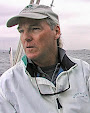
    Earlier this week I had coffee with the new editor of Prosper magazine, Jeffrey Young, who is one of those free-wheeling, free-thinking kind of editors who are simultaneously fun and a writer's nightmare. Fun because they challenge writers and love new ideas. A nightmare because they will not accept half-effort on writing or research. The unmotivated writer need not approach Jeffrey Young.

    Jeffrey Young
    Jeffrey Young

    I would wager, however, that once a writer gets to know Jeffrey - and they agree on stories and styles - that writing for Prosper could become a good, regular-writing gig.

    The other side to knowing many editors is when stories pop up, you have many directions in which to sell.

    As part of Legislative Analyst's look at the proposed governor's budget this week, I found a half-dozen story ideas which I could aim directly at magazines for which I've written. Queries have already gone out this morning for a story on making last-year's "yacht tax" a permanent tax (it was set to sunset), a second on a strong recommendation that state university student fees not be hiked 10 percent, but 2.4 percent, and a third on health-care issues.

    All three are going to editors for whom I've written before and so the whole nervousness on the editor's part (Can this guy write these stories?) is missing. The story ideas will be judged solely on their merit - and space considerations - by the editors.

    Oops. Just thought of a fourth query, based on that LAO report. Time to get writing another email.

    Saturday, February 17, 2007

    Help for writers who suffer from 'I' disease

    SACRAMENTO, Calif. - The first batch of stories from my magazine class this fall will invariably have a few people who write their articles in the first person.

    What's wrong with that? Well, the biggest problem is that relatively few magazine pieces are written in first person, relatively few of the students writing these pieces have authorative voices to speak on the topics of which they write, and beyond that, well, it's just darned annoying to look across a 25-paragraph story and see "I" cropping all over the place.

    The record in my teaching came several years ago when a writer used "I" 47 times in a 500-word story - and complained that the 500-word limit was too restricting. No disagreement here, so when his paper was returned to him, my note pointed out that he had 47 more words to work with right away. He wasn't amused.

    In byline writing, the reason to avoid referring to yourself is that it's redundant. Your name is already attached to the article. So to say, "I saw the room was full of cats," is unnecessary. Instead, the writer should simply say, "The room was full of cats." (That would save two words.)

    The cure for "I" disease is simple: don't use "I" unless there is absolutely no way around it.

    But what about a first-person story? OK, a few first personal pronouns are ok, but very few.

    At least that's what I say.

    Thursday, February 15, 2007

    Mission Impossible time management works - sometimes

    SACRAMENTO, Calif. - There are days writing and there are days writing but today all the pieces fell into place so neatly it was as if the scriptwriters for Mission Impossible had plotted it out.

    It started before dawn with an article due, which I hammered until I was about half done. I checked my email and discovered, gasp, that my Washington D.C. editors had a second major story they wanted done - ASAP. When they say that , they don't mean Anytime-Sure-Amigo-Please.

    So I looked at the clock and started writing my first story even faster, sliding it in the email an hour ahead of when I thought I would, giving me time to get the second story done, too.

    But it was the research for my third story that put things into the Mission Impossible category.

    I was scheduled to attend a legislative hearing - starting at about 10:30 a.m. - for a story due Friday. But at 10:30 a.m. - thanks to the second urgent story - I was just barely heading out the door to get there and, for some reason, I thought about the Cal Channel, a cable channel that broadcasts many state legislative committee hearings.

    Voila! One click and I was there, watching Kim Belshe of the state Department of Health explaining the governor's health plan.

    Senate Hearing on television
    Senate hearing on cable TV

    And for the next couple of hours, I recorded the session on my digital recorder - just as if I was sitting in the stuffy room downtown. It went fine. Great in fact. A little lunch, more tea, sit back, take a few notes.

    Then two talking heads from the Legislative Analyst's Office came on and started talking about a report they had prepared for the committee - a hardcopy, printed report that they circulated at that moment. And the report was dynamite - exactly what I needed to make my story newsworthy.

    Merde! That's why actually going to such hearings is safer. Now I thought I was going to have to go downtown, park at the Capitol (equally difficult to the task of trying to park on my university campus), run into the hearing room and pray the two LAO guys had the report available for the press.

    But given that it was the LAO office, I decided to see if the report was somewhere online.

    I couldn't find it.

    Merde deux.

    But seeing the age of the two LAO analysts (mid 30s, maybe) I sent them both an email while they were still giving testimony, after snatching their email addresses from the LAO website, listed under staff contacts.

    Email to LAO staff at hearing
    Email to LAO staff members

    Sure enough, as soon as they left the front table where they were giving testimony, one of them emailed me (from a Blackberry, I think) pointing me to a link to the report - which was on the website it turned out. I doubt I would have ever found it without help.

    Now, armed with a digital recording of the entire hearing, notes taking during the testimony, and a solid report from the Legislative Analyst's Office, I'm ready to start writing that story. Technology, a couple of good breaks, and the fact that I can type about 75 wpm all made it work.

    But no more writing until tomorrow. I still have the theme song from Mission Impossible running through my brain.

    Wednesday, February 14, 2007

    Writing to find out what you need to know

    SACRAMENTO, Calif. - An old newspaper writer's trick is to start to write a story - leaving blanks where information is missing - and then going back to fill in what's needed.

    In magazine writing, it's a little harder, because the writing (and stories) can be more complicated, but the theory is the same: If you start to write the story and hit a wall, at least you know where the walls are. They could be informational, quotes needed, or simple understanding on the part of the writer about what-in-the-hell they are trying to write.

    Here's a quick example of something I will have to write Friday morning, that I could use as a prewriting:

    -----------------------------------------------------------

    SACRAMENTO, Calif. - A roomful of critics of Governor Arnold Schwarzenegger's (R) health insurance plan slammed the details of his proposal at a four-hour state Senate Committee hearing Thursday, Feb. 15, the first public airing of the proposals outside of a press conference.

    "QUOTE FROM CRITIC HERE...."

    The proposal, first unveiled XXXXX by the governor says that all California residents should have health insurance and mandates them to get it.

    "QUOTE FORM THE GOVERNOR'S EARLIER SPEECH"

    The proposal includes requirements that XXXX.

    FOLLOW WITH QUOTES FROM CALIF. NURSING ASSOCIATION AND DEMOCRATS.

    -------------------------

    This kind of prewriting provides at least a template for the story.

    In a magazine piece, writing the first four or five paragraphs does the same thing, giving the article some focus. And perhaps more important, it forces the writer to really think about the story and how to make it interesting.

    It's better than staring at a keyboard and monitor.